
Fire district towns: stay in Howland, keep working toward owning the building
No town asked for a new station. Howland’s select board wants to keep negotiating, but any sale would need a town vote, and the bond runs until 2052.
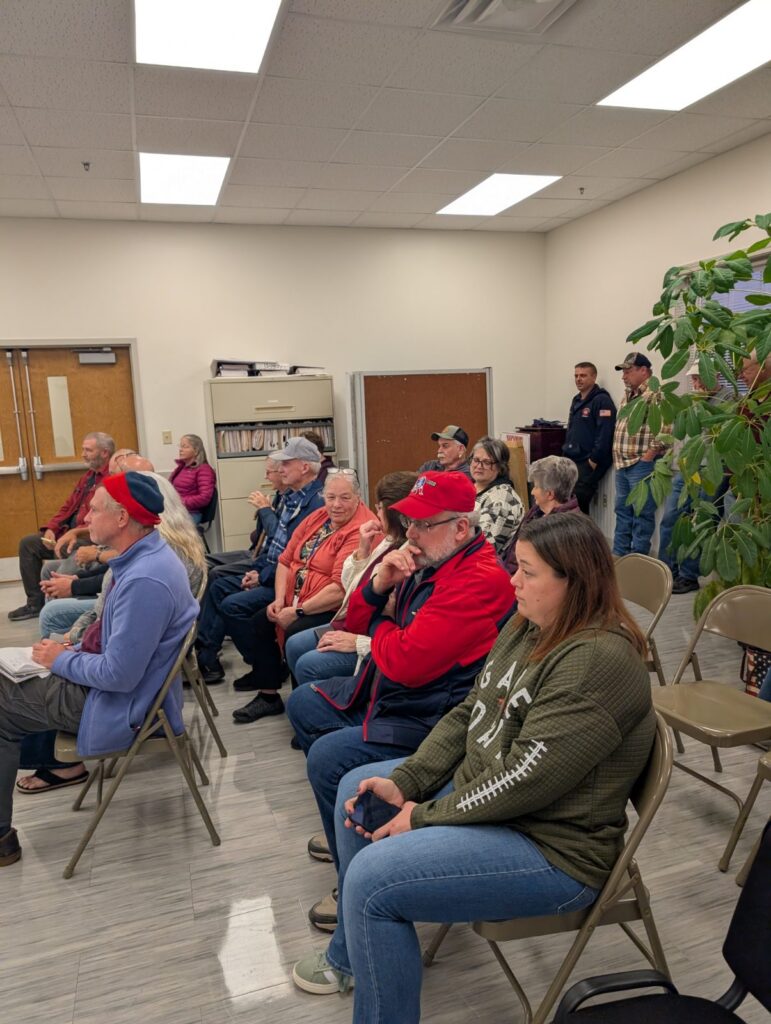
HOWLAND — The towns of Central Maine Highlands Fire & EMS District #1 gave their board a clear message Thursday night: do not build a new station. Stay in the Howland building and keep negotiating toward the day the district owns it.
As Lincoln Town Square reported last month, directors were asked to take three options back to their select boards: keep leasing the Howland station, lease it with an option to buy, or build the district’s own station, projected at about $10.5 million not counting land. When the board went around the table on Oct. 8, no town asked for a new station. Several directors said their towns could not afford one.
The board took no vote on the building, and board president Bob Genest said none was planned. “There’s been somewhat of a misconception that there was going to be some big vote tonight,” he said. “That never was our intent.”
Instead, Genest said he would send the Howland Select Board one question on Friday morning. In an email to Lincoln Town Square, he shared the wording: “Can the Town of Howland and the Central Maine Highlands Fire and EMS District #1 enter into a long-term lease-to-own agreement? Once the bond is paid off and discharged, the building and grounds will be owned by the district.” He said the question has to be answered by both the district’s and Howland’s attorneys, and that it assumes the two sides can agree on lease and purchase terms. Brawn told Lincoln Town Square in an email that the select board received the question Friday and that it may be on the board’s next agenda.
Howland select board members in the room gave an early answer. With Genest’s agreement, Glenn Brawn, chair of the Howland Select Board, asked his board for a show of hands. Brawn said it was a straw poll, not a formal vote, since the select board was not in session. All five select board members were in the room, and all five raised their hands to keep negotiating and to look into the district owning the building at the end of the bond, Brawn said in an email after the meeting.
The decision matters in Lincoln, too. The Howland-based district is Lincoln Fire’s main mutual-aid partner, according to a 2026 Lincoln Fire & EMS brief to the Town Council, and its crews helped Lincoln fight the Aug. 31 wildfire in Chester.
What the towns said
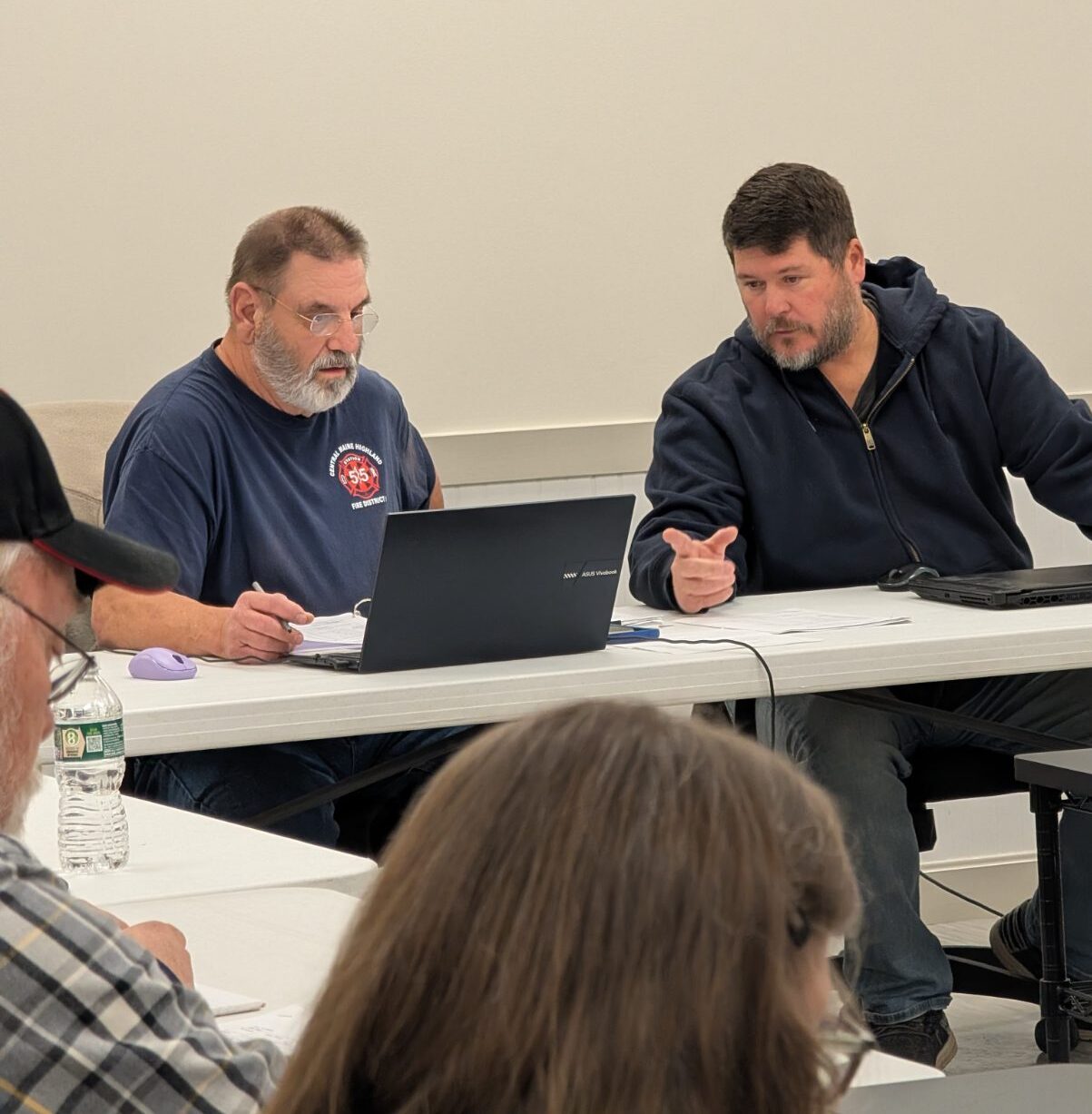
Burlington director John Smith said his select board met the night before. It wants a new station only “if it’s absolutely necessary,” calling it a last resort. He pointed out that Burlington already has an empty fire station. Burlington’s objection is to who pays for what while the lease runs. He said the district uses about 80 percent of the building and the town of Howland about 20 percent, mostly the upstairs town office and library, but the district’s payments cover all of it. If the district ends up owning the building, he said, Burlington would have no problem with the district paying 100 percent.
Smith warned against building elsewhere. The district would be paying for two buildings, he said, and he has heard talk of Howland leaving the district, which pays about 22 percent of its costs. “That’s a no-win situation for all of us,” he said.
Brawn said the Howland Select Board has discussed how Howland taxpayers would be able to pay for two buildings, but has not specifically discussed leaving the district. Asked about Smith’s point on who pays for the building, Brawn said Howland currently pays just over 21 percent of the district’s budget.
Edinburg director Darin Wallace said the small town, which he called a retired community, could not afford a new building. Residents he had talked to want the district to own the current one, he said, and “they’re wondering why Howland wants to keep this building and not sell it to us.”
Lowell director Mike Gostin and Passadumkeag director Jana Spencer said they agreed with Burlington and Edinburg.
Howland director Jeff Arrants, the board’s vice president, said select board members he had spoken with were “all on board with continuing negotiations, in a positive way.”
George Buswell, an alternate director for Penobscot County’s unorganized territories, said he raised the question with the Penobscot County commissioners in public session Wednesday. They took no formal vote. He said their informal sense was that if buying the building would stabilize the district’s costs, “that’s the route we ought to be trying to follow.”
Genest spoke for Enfield. He said the town would accept a lease that ends in the district owning the building. If that turns out not to be possible, he said, Enfield’s selectmen told him “without hesitation” that they would back building new.
The legal question
Last month both boards agreed to ask their lawyers whether the district could lease the building now and take ownership once Howland’s bond is paid off.
Genest said the district’s attorney has answered yes. He identified the lawyer as Tim Pease of the Bangor law firm Rudman Winchell, whom he described as a bond attorney. According to Genest, the attorney said a quasi-municipal body like the district can lease the building and buy it once the bond is discharged, but not before. He said the attorney saw no problem with the IRS, because the district is a quasi-municipal entity. A building financed with tax-exempt bonds could not be sold to a non-municipal buyer, he said.
Howland’s attorney has not yet answered. A Howland representative said the town manager would contact the town’s bond counsel to set up a meeting with the district’s attorney and the Maine Municipal Bond Bank, “and then we’ll have the official answer. We’ll get it in writing.” Brawn identified Howland’s bond counsel as Alyssa Tibbetts of Tibbetts Law Firm in Scarborough. No meeting date has been set, he said, and the answer will be public.
Howland’s bond was $3.4 million, issued Nov. 3, 2022, according to Brawn. The annual payment is about $217,000, and the final payment is due Nov. 1, 2052. Under the arrangement being discussed, the district would take ownership once that bond is paid off.
Arrants made a point of telling residents what any deal would require. “Whatever agreement that is worked out between this board and the town of Howland Select Board, the town of Howland residents will have to approve it through a referendum vote to sell the building,” he said. “The town of Howland could still say no.”
Whether that referendum could be held before the bond is paid off, for a sale that would take effect afterward, is still an open question. Brawn said Howland is waiting for clarification from the Maine Municipal Bond Bank.

‘It wasn’t built for us’
Genest used part of the meeting to answer what he said he had seen on social media and in the press. He called the station the district’s home but said it was built for the Howland Fire Department, which has since been dissolved. The district started on July 1, 2024.
He laid out the district’s case as a matter of fairness. Under the formula the members agreed to when the district formed, Howland pays 21.9 percent of the district’s costs, he said, so the other seven towns and the unorganized territories cover the rest of the rent on a building one town owns.
The district’s 2026-27 assessment sheet, which Genest provided after the meeting, bears that out. Of the district’s $3.56 million budget, about $1.2 million comes from other revenue. The remaining $2,358,922 is split among the members, half by population and half by property value. Howland’s share is $516,333, or 21.89 percent. Enfield pays the most, $945,672, or about 40 percent.
| Member | 2026-27 | 1-yr change | Share |
|---|---|---|---|
| Enfield | $945,672 | +$113,691 | 40.09% |
| Howland | $516,333 | +$38,794 | 21.89% |
| Lowell | $262,019 | +$23,696 | 11.11% |
| Burlington | $232,253 | +$14,481 | 9.85% |
| Passadumkeag | $171,010 | +$15,927 | 7.25% |
| Edinburg | $69,429 | +$6,310 | 2.94% |
| Maxfield | $47,244 | +$3,633 | 2.00% |
| Seboeis Plantation | $38,321 | +$1,756 | 1.62% |
| Penobscot County unorganized territory | $38,321 | +$4,603 | 1.62% |
| Hancock County unorganized territory | $38,321 | +$4,603 | 1.62% |
| Total | $2,358,922 | +$227,493 | 100% |
“We’d like to have all the towns own the building, not just one town,” he said.
Genest said his own district tax as an Enfield resident went up about $100 this year, to about $650. He said the goal is a fire and EMS service that is still stable “a generation or more” from now.
What the district costs
The district’s costs have climbed every year since it formed. Its budget for this fiscal year, 2026-27, is $3.56 million, up from $3.13 million last year and $2.6 million in its first year, 2024-25. The share the member towns cover has grown faster, from $1.5 million in the first year to $2,358,922 this year, an increase of about 57 percent in two years.
Each member’s share is figured half on population and half on state property valuation, so the towns whose property values rise fastest see the biggest increases. Enfield’s valuation rose nearly 19 percent in a year, to $308 million, and its bill went up $113,691, or 13.7 percent. Howland’s valuation rose about 7 percent, and its bill went up $38,794, or 8.1 percent.
The rent on the Howland station, $24,033 a month or about $288,400 a year, makes up about 8 percent of the district’s budget. Most of the money goes to people. From July through September, wages and benefits made up about $583,000 of the district’s $1.01 million in expenses, according to the district’s profit-and-loss statement in the Oct. 8 meeting packet. Health insurance alone cost $119,365 over those three months, a cost the board learned in August is rising 30 percent. Ambulance billing brought in about $245,600 in the same period, roughly 30 percent of the district’s income. Payments from the member towns made up nearly all of the rest.
The pressure isn’t unique to the district. In 2023, the Maine Legislature created a $31 million program to shore up struggling ambulance services, and by October 2024 the state had awarded about $10.1 million in stabilization grants to 184 agencies, according to Maine EMS. At the time, Maine EMS said the state’s largely self-funded ambulance model was no longer sustainable and that roughly 275 providers were operating at a loss or barely breaking even, The Maine Monitor reported.
Equipment has also become more expensive and harder to get. Fire departments have reported price increases of 20 to 25 percent for fire apparatus and ambulances, and the wait for a new engine has roughly doubled, to 25 to 28 months, the International Association of Fire Chiefs told a U.S. Senate subcommittee in September 2025. District officials told the board last month that new engines now cost $800,000 to $1 million, one reason the district has been buying used trucks it can later remount on new chassis.
Health coverage is rising nationally, too, though not as fast as the district’s 30 percent. Average premiums for employer-sponsored family coverage rose 6 percent in 2025, to $26,993, according to KFF’s annual Employer Health Benefits Survey.
Residents ask about the town office, the library and taxes
Two Howland residents spoke during public comment.
The first asked whether the town office and library could stay in the building without new costs to taxpayers. Genest said an early district proposal had included taking over the library space, because the fire side of the building is tight. He said that idea was dropped as soon as it became a stumbling block. He said he could guarantee the arrangement only through the life of the bond. “Once we own the building … it’s your building,” he said. “I can’t guarantee you that, but I can guarantee you through the bond.”
The second resident said she helps her mother with her finances and was worried about taxes. She also said a town poll had already said no to the idea. She said she understood more after hearing the board than before she came. Board members said it was a survey, not a vote. The survey, taken June 9, asked about selling the building; 110 people said not to sell and 100 said to sell, Brawn said. Genest said the survey was “a snapshot in time with not all the facts available.” He told her that if the two boards reach an agreement, there would be open meetings before anything goes to Howland voters.
Brawn suggested joint informational meetings once there is a deal worth presenting, possibly in the spring “when the snowbirds get back.” Brawn said afterward that there is no timeline yet and that it will depend on how long negotiations last. Genest said he would want an agreement presented to all of the member towns and would like it settled within the next fiscal year.
Other business
Fundraising. Genest said the district has received a few donations but “nothing serious” so far.
Bookkeeper hired. The board approved a contract with SmallTown Promotions Inc. of Howland for part-time bookkeeping, with Michelle Atherton as the bookkeeper. The agreement calls for eight hours a week at $50 an hour, or $400 a week, billed monthly, and either side can end it with 30 days’ notice. Atherton has done the district’s books at no charge for about two years, Genest said. She will be a contracted consultant, not an employee. She will handle warrants, QuickBooks entries and deposits, and will attend board meetings to explain the financials. She will not be able to move money, Genest said. He signs every check. John Smith said he had Burlington’s treasurer review the proposal, and she found it in line with what she would expect for the work. Asked by Buswell why she would not be an employee, Genest said a contractor carries its own liability insurance, which protects the district if there is a mistake. He said the job was not put out to bid because she already knows the district’s books. He said the cost would be budget-neutral this fiscal year, paid from payroll the district did not spend while several employees were on unpaid or insured leave, and would go into next year’s budget.
Replacement trucks arriving. Deputy Chief Cody Smith gave an update on the three used trucks the board approved for $370,000 on Sept. 10 to replace four older units. A new four-wheel-drive engine with a 500-gallon tank and a 1,500-gallon-per-minute pump replaces a tanker and a brush truck; it is in the bay waiting on a radio. The replacement for unit 551, with a 1,000-gallon tank and a 1,750-gallon-per-minute pump, arrived the morning of the meeting and was parked outside. The replacement for unit 552, with a 1,000-gallon tank and a 1,500-gallon-per-minute pump, is having its generator repaired. He said the replacements increase both water capacity and pump capacity. They came through a Pennsylvania broker but are Southern trucks with little rust, he said. Derick Dawes, a firefighter-EMT candidate who is also the district’s full-time mechanic, said they were in good shape.
Ambulances a year early. The three new ambulances paid for with congressionally directed spending sponsored by U.S. Sen. Susan Collins are now due a year sooner than expected, Cody Smith said. In September, the district expected the build to take 18 to 24 months. They should leave the factory around the end of May and be in service by the start of the next fiscal year. All three are four-wheel drive. Bangor’s Autotronics will outfit them and do future remounts. Cody Smith said each ambulance, chassis and box only, costs just under $500,000. The $1,875,000 grant was approved in September by the federal Health Resources and Services Administration.
Equipment lease paid off. Genest said the district drew $82,500 on its line of credit, as the board approved in September, to pay off its equipment lease with Howland, which makes the district the owner of that equipment. He said the district hopes to get about $85,000 for the trucks being replaced, and that money will go back to the line of credit.
Training money and radios. Cody Smith said the district expects about $17,500 back from the state for education costs for current employees. Two more medics will be sent to school, and he said the program will cover some of their overtime and buy training equipment, roughly $34,000 a year the district can get back from the state. He also said a grant of just under $17,000 will buy matching new radios for all of the district’s trucks.
Chief Josh McNally was absent. Genest said he is out on medical leave.
The board’s next meeting is Nov. 12.
Related coverage
- Fire district lands $1.9 million for ambulances as board weighs $10.5 million station (Sept. 21)
- Fire district answers 153 calls in August, including propane truck fire and water rescue (Sept. 25)
- Neighboring district helped Lincoln fight Chester wildfire (Sept. 20)
Sources: This report is based on the district’s video recording of the Oct. 8 board meeting and Lincoln Town Square’s own audio recording, both transcribed with the help of automated tools and checked against the recordings. It also draws on documents provided by the district: the meeting agenda, the minutes of the Sept. 10 meeting, the bookkeeping services agreement, the 2026-27 member assessment sheet and profit-and-loss statements for July through September 2026. Additional details came from follow-up correspondence with board president Bob Genest and with Glenn Brawn, chair of the Howland Select Board. State and national figures come from Maine EMS, The Maine Monitor, the International Association of Fire Chiefs and KFF, linked in the story.
Disclosure: Lincoln Town Square founder Christopher Lord helped form the district and served on its board as Edinburg’s director until Aug. 21, 2026, when he resigned after moving to Lincoln.
About Lincoln Town Square: Lincoln Town Square is independently owned by C.A. Lord Software Group LLC and is not affiliated with the Town of Lincoln, the fire district or any of its member towns.